
Retail
Store fixtures and retail displays
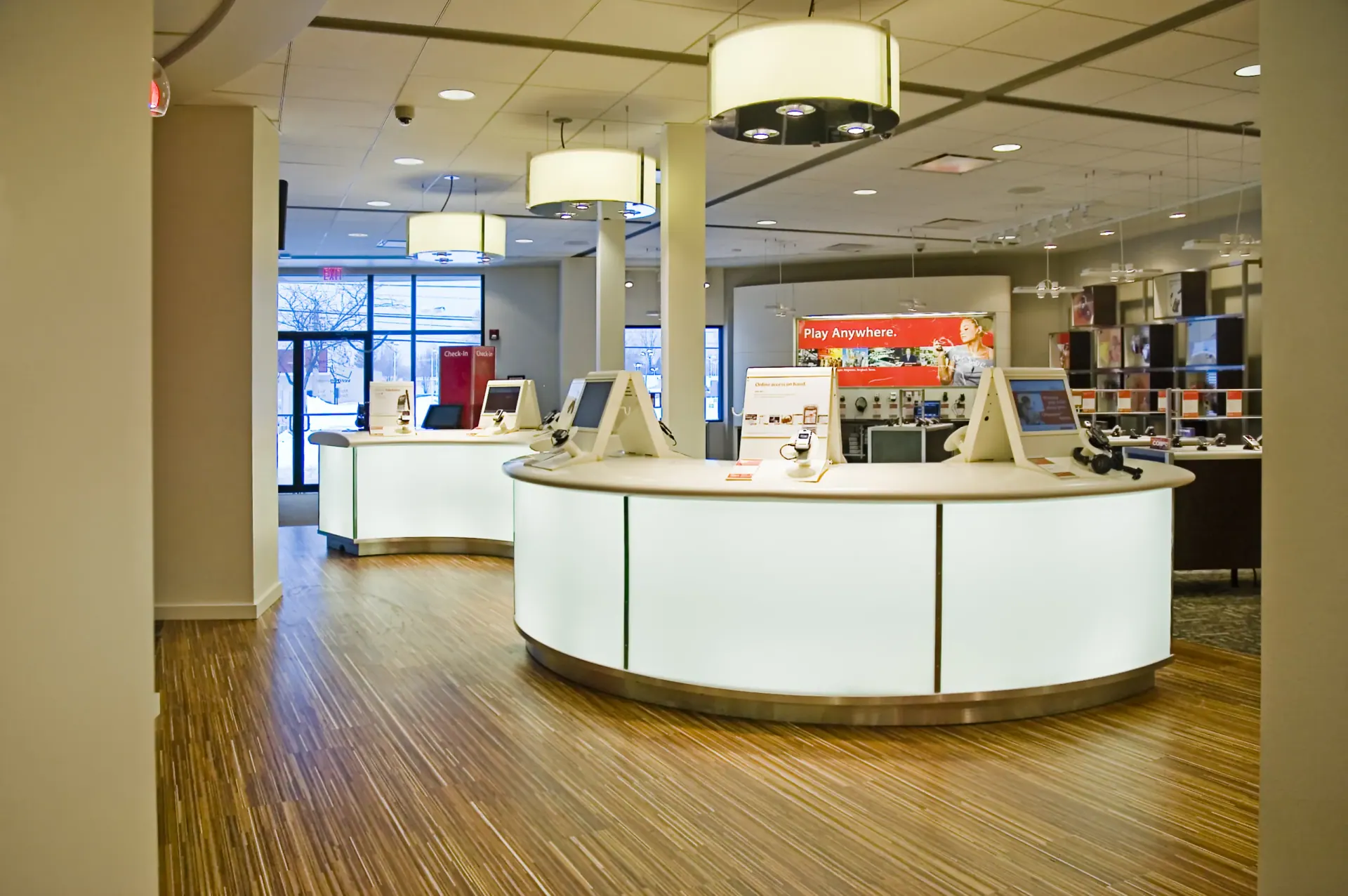
Cash-wraps, display counters, demo kiosks and wall systems, built from your drawings for one store or a full rollout.
Learn morePlastic laminate and solid surface countertops, vanities with integral sinks and transaction tops, fabricated in our shop, plus straight advice on when quartz or stone is the better fit.
Countertops take more abuse than anything else we build. They get wet and hot, people lean on them, and staff clean them with whatever is under the sink. We fabricate two main families in our shop. Plastic laminate tops are high-pressure laminate bonded to an engineered core, finished with a self edge, a postformed edge or an applied edge. Solid surface tops are a filled cast polymer (Corian, for example, is acrylic with a mineral filler), the same color all the way through, cut and joined into vanities, integral sinks, transaction tops and nurse-station counters. For hospital and clinic restrooms, solid surface is often the default. For break rooms, workrooms and most office counters, laminate does the job for less money. Quartz and natural stone have their place too, and part of our job is telling you when one of them fits better than what we fabricate.
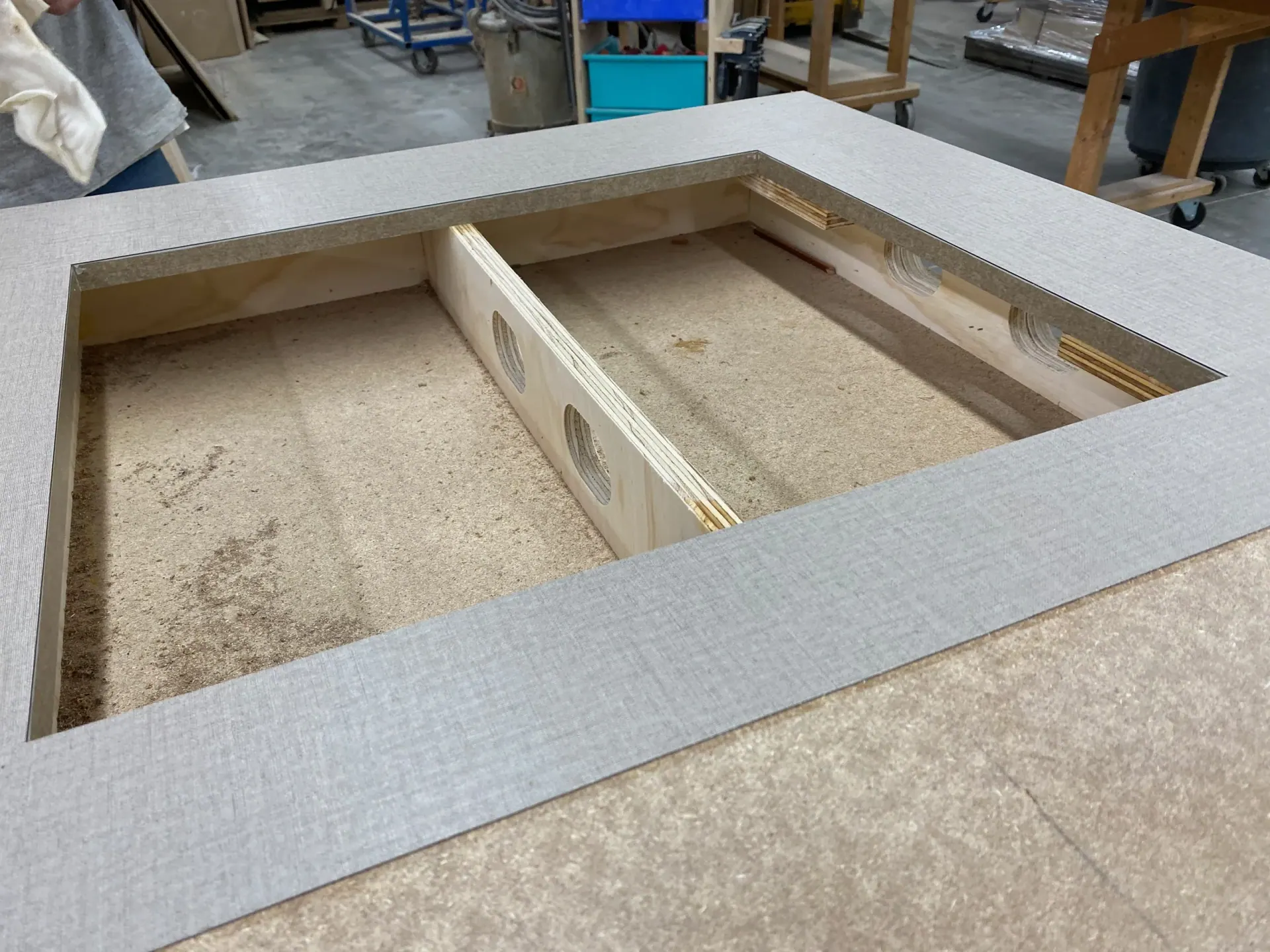
A laminate top starts with the laminate grade. General-purpose sheet, about .048 inch thick in Wilsonart's line, is made for flat work. Postforming grade is thinner, about .039 inch, and can be heated and rolled over a simple radius, typically around 9/16 inch on the outside, which gives a rounded front edge with no seam on top. A backing sheet goes on the underside so the panel stays balanced and flat, and cutouts for sinks and grommets get rounded inside corners, because square inside corners in laminate tend to crack. Solid surface is a different process. Sheets are cut and routed, then joined with a two-part adhesive that bonds chemically, with a strip of the same material reinforcing each joint from below. Sanded and finished, those joints are inconspicuous, and an integral bowl bonded to the top leaves no rim to trap dirt. Because the material is the same through its thickness, most scratches and burns can be sanded or repaired back to the original finish.
Countertops are measured after the cabinets are set, because walls are never perfectly straight and a top has to scribe tight to them. Long tops travel in sections. Laminate seams fall where the shop drawings put them, ideally away from sinks. Solid surface joints can be bonded on site with the same adhesive, so a long nurse-station counter can arrive in pieces and leave as one surface. Sinks, faucets and soap dispensers need their cut sheets before fabrication, not after. And the laminate maker asks for the laminate, backer and core to sit together for 48 hours at about 75 degrees before they are glued up, which is one reason a rush order still takes a few days.
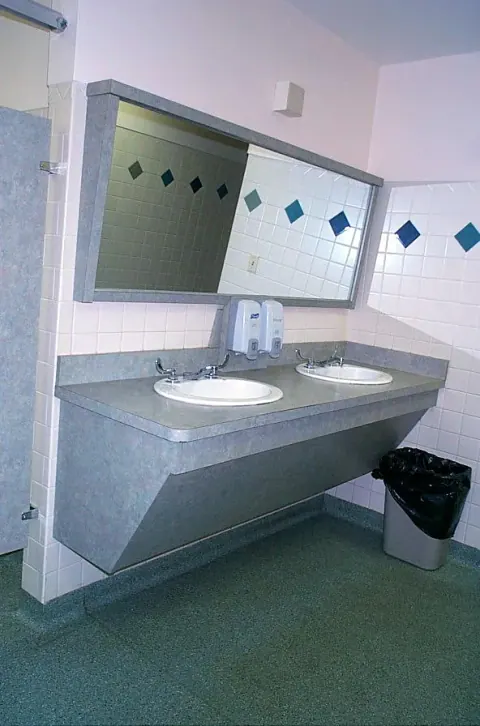
Laminate is the value pick and holds up well in dry, light-duty spots. Its weak points are heat, water at the edges and cutouts, and impact on corners. Wilsonart says not to expose its laminate to temperatures above 275°F for long periods, so it is a poor choice beside a coffee station with no landing space. Solid surface is the pick for hospital and clinic restrooms, nurse stations and transaction counters. Its bonded joints are non-porous, it can carry integral sinks and coved backsplashes, and solid colors test at Class 1 under ASTM E84 with a flame spread of 25 or less. It is softer than stone, though. It scratches more easily, and DuPont tells owners not to set hot pans on it or cut on it directly.
Quartz is the better choice when a top sees heavy daily wear and heat, such as a cafe counter or a busy service top in a restaurant. It is roughly 90 percent quartz with a resin binder, harder and more scratch resistant than solid surface, but its seams are easier to see and repairs are a specialist job. Natural stone is mostly a look decision. When a project calls for quartz or stone, we can bring the top in through our procurement and build the casework and supports to suit it. On price, the order usually runs laminate, then solid surface, then quartz and stone, with the gap shaped by edge profiles, the number of cutouts, integral sinks, curves and the number of seams. A double-sink vanity with integral bowls costs more than a flat top with drop-in sinks, and it is easier to keep clean for years after.
Cash-wraps, display counters, demo kiosks and wall systems, built from your drawings for one store or a full rollout.
Learn more
Laminate and wood cabinets for offices, nurse stations, clinics and break rooms, built in our shop from your drawings and spec.
Learn more
Reception desks, wall paneling, column cladding, veneer work and display cases for offices, healthcare and restaurants.
Learn more